An island steeped in profound historical importance, Santorini’s dramatic beauty is matched only by the depth of its history.
Beneath its iconic whitewashed villages and cobalt-blue domes lies a story forged by fire, sea, and time; one that has shaped not only the island itself but also the course of Aegean civilization.
Santorini’s storied past is nothing short of extraordinary. Around 3,600 years ago, during the height of the Minoan civilization, the island was the epicenter of one of the most powerful volcanic eruptions ever recorded: the Minoan (or Thera) eruption.
This cataclysmic event dramatically altered the island’s geography, causing the center of the island to collapse and form the vast, water-filled caldera that millions of wanderers from around the world admire to this day.
Santorini’s history: A land born of catastrophe and creation
Layers of volcanic ash –some of them even reaching hundreds of meters in depth– blanketed the island of Santorini, as well as the surrounding regions. The eruption’s consequences were felt far beyond Santorini itself – a notable chapter highlighted in all of Santorini’s museums.
Many historians and scientists believe it contributed to the decline of the Minoan civilization on nearby Crete, approximately 110 kilometers to the south, partly through devastating tsunamis and widespread environmental disruption.
The sheer scale of this event has also fueled centuries of fascination. Some scholars have even linked the Thera eruption to Plato’s legendary tale of Atlantis, suggesting that Santorini may have inspired the myth of a sophisticated island civilization lost beneath the sea.
A volcano that never truly sleeps
Though tranquil at first glance, Santorini remains the most active volcanic center of the South Aegean Volcanic Arc. Today, the volcano’s presence is most visible in the island’s dramatic cliffs, multicolored beaches, and the caldera itself – now peacefully filled with seawater.
The South Aegean Volcanic Arc stretches roughly 500 kilometers (310 miles) in length and spans between 20 and 40 kilometers (12 to 25 miles) in width. Volcanic activity in this region dates back 3 to 4 million years, while eruptions on Thera began around 2 million years ago.
Early activity included the extrusion of dacitic lavas from vents near Santorini’s picturesque Akrotiri, an area that would later go on to become one of the most significant archaeological treasures in Santorini and the Aegean region in its entirety.
Walking through living history
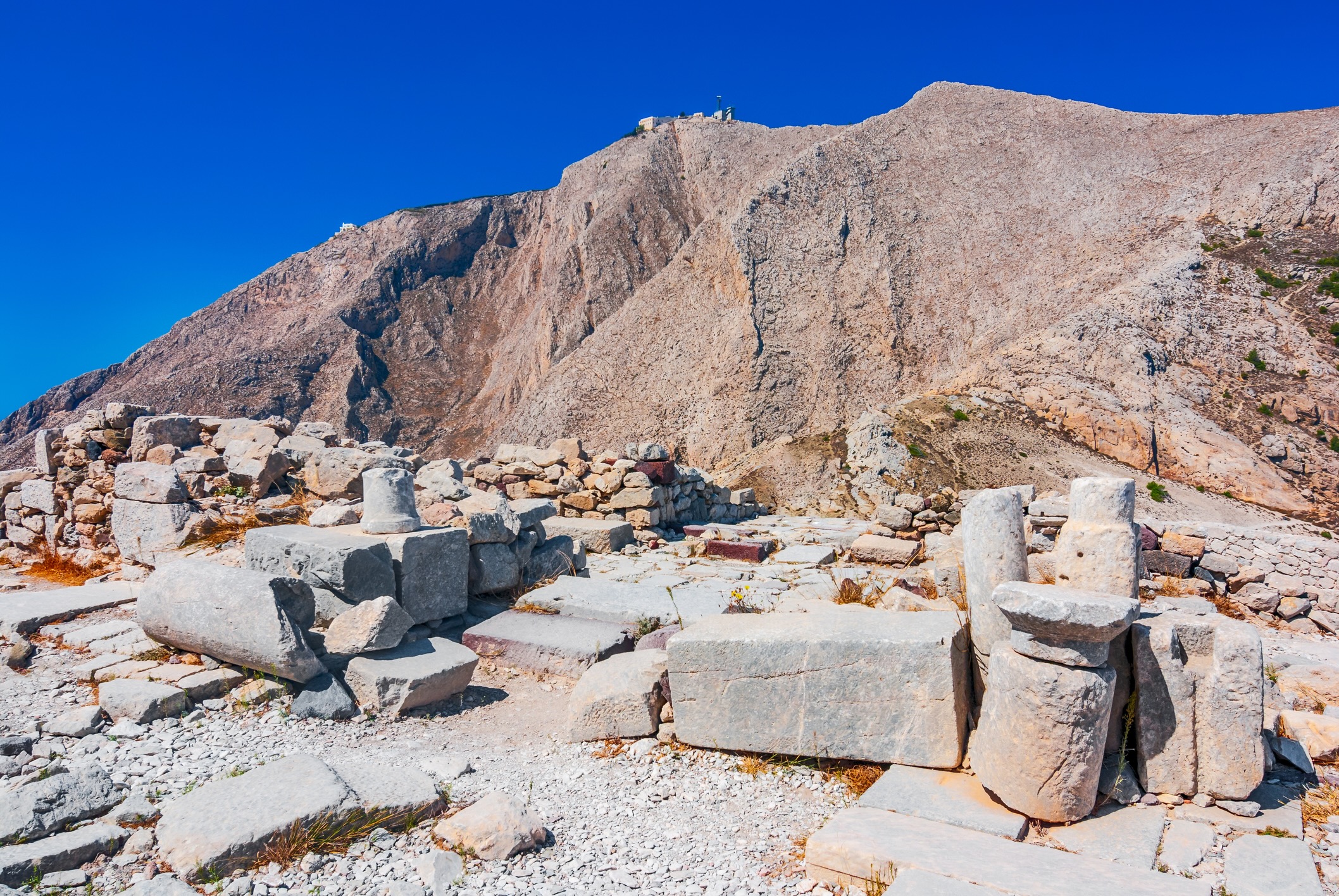
What makes the island truly unique is how seamlessly its ancient past blends with modern life. Santorini’s archaeological sites such as Akrotiri, often referred to as the ‘Pompeii of the Aegean’, offer remarkable insights into advanced prehistoric societies, while the island’s museums preserve artifacts that tell stories of trade, art, and daily life spanning millennia.
Every path, cliff, and shoreline on the island of Santorini is a reminder that this is not merely a beautiful destination; it is a living record of wondrous natural forces intertwining with the beauty of human resilience.
Ready to explore Santorini’s past firsthand? Contact our Guest Experience Specialists to arrange a guided tour of the island’s archaeological sites or museums and dive deeper into the fascinating history of Santorini.